Saranya Vijayakumar
Ph.D. Candidate in Computer Science
Carnegie Mellon University
saranyav [at] andrew.cmu.edu
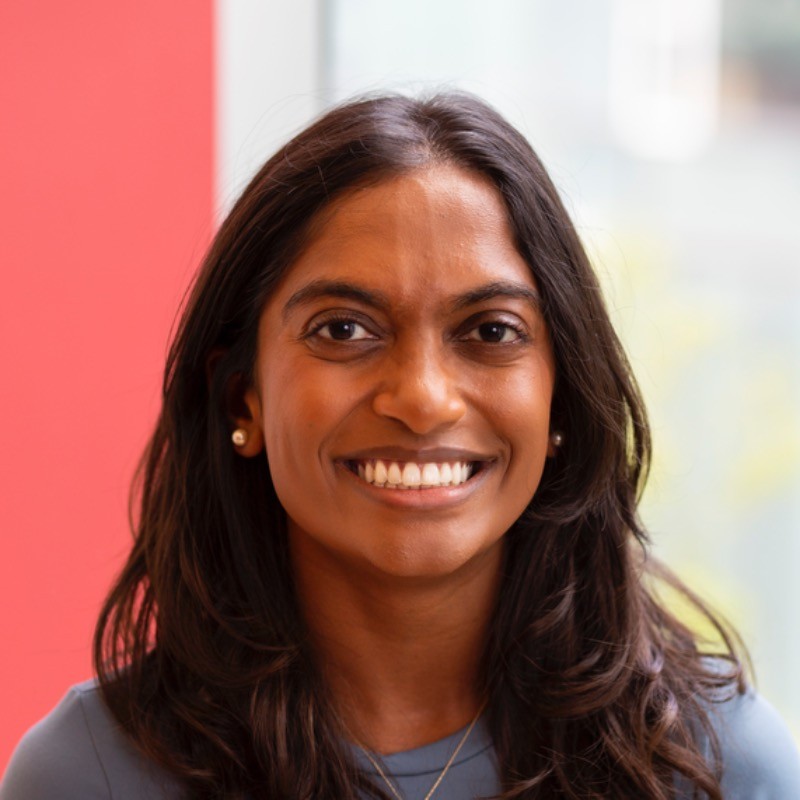
I am a PhD candidate in Computer Science at Carnegie Mellon University, advised by Christos Faloutsos and Matt Fredrikson, and an Anthropic Security Fellow. I study the safety and security of AI systems under adversarial conditions, developing structured, verifiable ways for increasingly autonomous systems to check claims and enforce consistency, spanning red-teaming, prover-verifier oversight, and neurosymbolic reasoning. Before CMU, I earned my A.B. at Harvard and spent three years as a data scientist at Goldman Sachs. I am a 2026 ML and Systems Rising Star and a DoD NDSEG Fellow.
Research
-
[1]
Cornered Agents Probe Their Sandbox: Tool Misuse and Evaluation Integrity for LLM Agents in the Wild
NeurIPS 2026 WorkshopSaranya Vijayakumar, Koichi Onoue
Third Workshop on Agents in the Wild: Safety, Security, and Beyond
-
[2]
Self-Prompt-Injecting Backdoors in Coding Agents
NeurIPS 2026 WorkshopSaranya Vijayakumar, Dmitrii Krasheninnikov, Matthew Jagielski, Nicholas Carlini
Third Workshop on Agents in the Wild: Safety, Security, and Beyond
-
[3]
RoleMine: Mining Behavioral Patterns in Heterogeneous Call Graphs
CIKM (upcoming)Koki Kawabata, Pedro Fidalgo, Mirela Cazzolato, Saranya Vijayakumar, Yasuko Matsubara, Yasushi Sakurai, Christos Faloutsos
-
[4]
Sequential Pattern Recognition Attacks against Deployed Topic-Based Mechanisms
ICISSP 2026 · Best Student PaperSaranya Vijayakumar, Matt Fredrikson, Norman Sadeh
-
[5]
Prototype-Integrated Representation Learning for Novelty Detection
IEEE TrustCom 2025Saranya Vijayakumar, Matt Fredrikson, Christos Faloutsos
PDF -
[6]
AICodeDetect: A Pipeline for Systematic Detection and Analysis of AI-Generated Code
IEEE MCSI 2025Saranya Vijayakumar, Philip Negrin, Christos Faloutsos
PDF -
[7]
Mechanistically Interpreting a Transformer-based 2-SAT Solver
ICML 2025Nils Palumbo, Ravi Mangal, Zifan Wang, Saranya Vijayakumar, Corina Pasareanau, Somesh Jha
PDF -
[8]
Aligned LLMs Are Not Aligned Browser Agents
ICLR 2025Priyanshu Kumar, Saranya Vijayakumar, Elaine Lau, Tu Trinh, Zifan Wang, Matt Fredrikson
PDF -
[9]
Through the Lens of LLMs: Unveiling Differential Privacy Challenges
USENIX PEPR 2024Aman Priyanshu, Yash Maurya, Vy Tran, Suriya Ganesh Ayyamperumal, Saranya Vijayakumar, Hana Habib, Norman Sadeh
Talk - [10]
- [11]
Talks
Sequential Pattern Recognition Attacks Against Deployed Topic-Based Mechanisms
Mar 2026LLM Security Vulnerabilities
Mar 2025AI Governance Course (17-416/17-716)
Security and Privacy in Practice
Nov 2024Information Security, Privacy & Policy (17-331/631) · Slides
AI Security and Governance
Apr 2024AI Governance Course (17-416/17-716)
AI Security, Robustness, and Privacy
Dec 2023Information Security, Privacy & Policy (17-331/631) · Recording (CMU Internal)
Final Project Judge
Fall 2024Information Security, Privacy & Policy (17-331/631)
Teaching
Teaching Philosophy
Teaching Statement PDFI believe in creating an inclusive learning environment that emphasizes practical understanding and critical thinking. My teaching approach combines theoretical foundations with hands-on experience, preparing students for both academic and industry challenges.
Teaching Experience
TA, Information Security, Privacy & Policy (17-331/631), with Norman Sadeh & Hana Habib
Fall 2023TA, Rapid Prototyping (15-294 & 15-394), with Dave Touretzky
Spring 2023Eberly Center Future Faculty Program, teaching development
2021 - 2023Mentorship
- Mentored high school student Philip Negrin on AI code-detection research (project video)
- Guided a team of 4 CMU Masters students on privacy research analyzing Google's Topics API (USENIX PEPR '24)
Research Projects & Impact
A few themes that cut across my work. Full details are in my CV and publications.
Agentic AI Security & Alignment
Red-teaming and alignment of LLMs deployed as autonomous agents. Showed that refusal-trained LLMs are easily jailbroken as browser agents (ICLR 2025), and now work on prover-verifier oversight and interpretability of agentic systems.
Neurosymbolic & Formal Methods
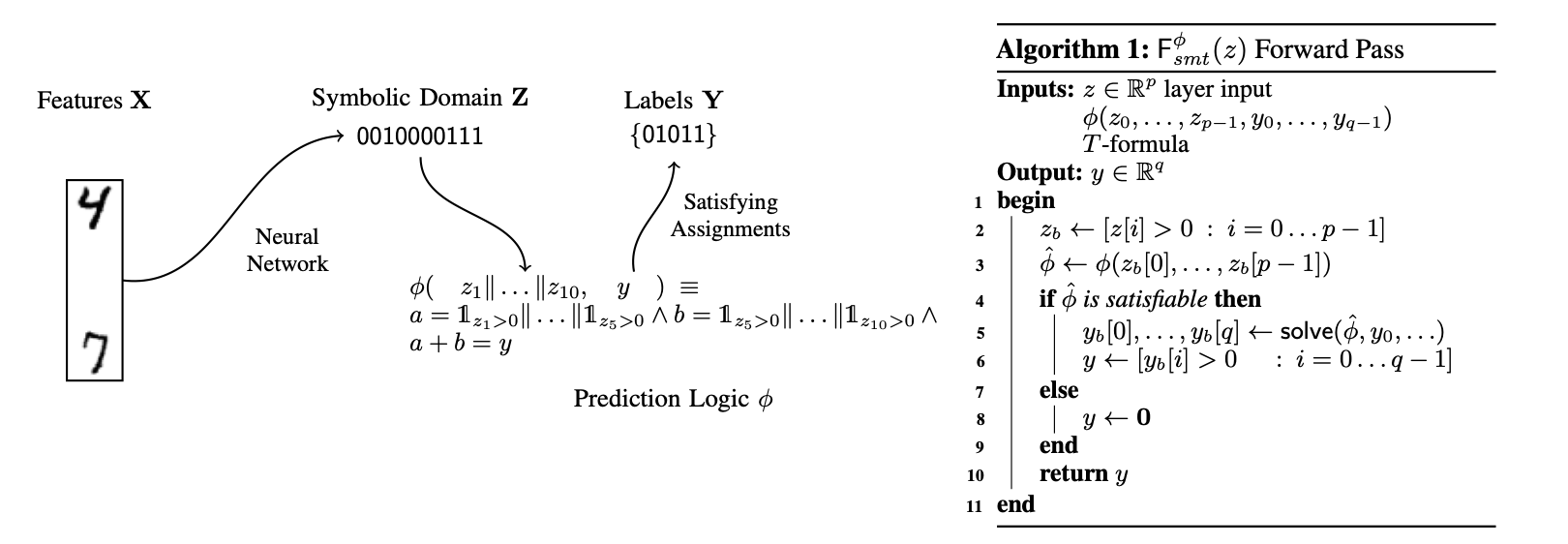
Grounding neural inference with SMT solvers (NeurIPS 2023 Spotlight), mechanistically interpreting transformer-based SAT solvers (ICML 2025), and formal verification of a secure messaging protocol used by the French government (Inria).
Large-Scale Fraud Detection
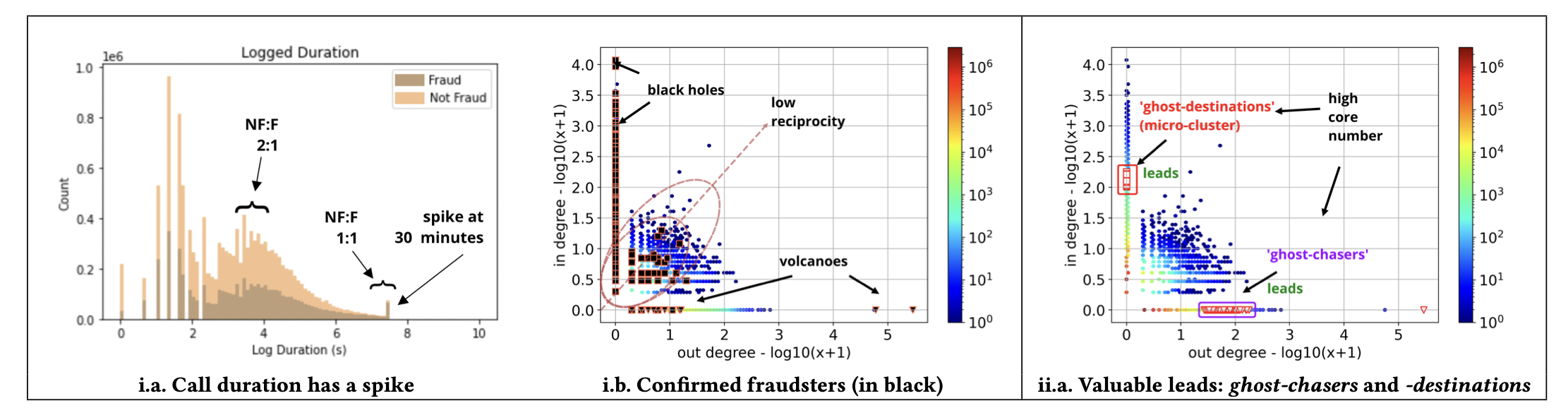
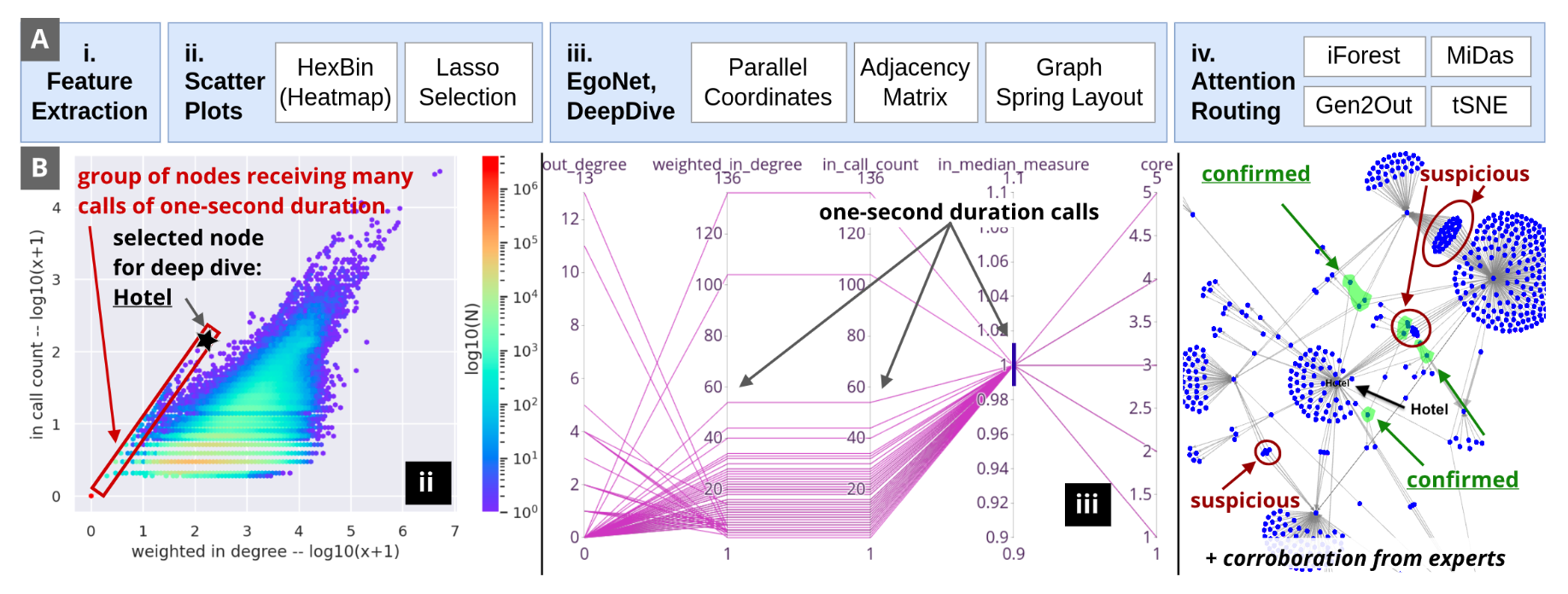
Scalable visualization and anomaly-detection methods for million-scale telecom and credit-card graphs, yielding deployment-ready systems with Mobileum (CIKM 2023, IEEE Big Data 2022, AAAI-23 demo).
Public-Interest & Policy Research
Earlier work spanning algorithmic fairness (Harvard Political Review, undergraduate thesis), a worldwide encryption survey with Bruce Schneier (covered by NBC News, The Intercept), and a CSET review on cybersecurity risks of AI-generated code for Georgetown.
Service & Leadership
Academic Community Building
- 90+ student participants; founded and lead a weekly lunch program for women and non-binary PhDs in SCS
- 30+ papers reviewed for ICLR, ICML, KDD, and NeurIPS
Outreach & Impact

Healthcare technology solutions with Partners in Health, Lima, Peru
Led computer science education programs in Boston public schools
Selected Media Coverage
- Taking on Tuberculosis, Harvard SEAS
- Trying to Stop Encryption? It's Everywhere, NBC News
- New Survey Suggests U.S. Encryption Ban Would Just Send Market Overseas, The Intercept
- Bringing Computer Skills to Classrooms, Harvard Gazette
Awards & Recognition
Research & Industry Experience
Anthropic Security Fellow at Anthropic
2026 – Present- Researching self-prompt injection in both pre-training and post-training with Nicholas Carlini, Matthew Jagielski, and Dmitrii Krasheninnikov
- Asking whether injected text in training data can later appear in chain-of-thought and cause a model to follow a malicious instruction that it believes it has already reasoned about
- Experiments span every part of the training pipeline: pretraining, SFT, DPO, and GRPO on 4B to 32B models
Research Intern, Agentic AI at Fujitsu Research, Pittsburgh, PA
Jan – May 2026- Studying agentic trust and sandboxing of agentic AI with Koichi Onoue and Roshni Kaushik
- Architecting, building, and deploying LLM-powered and agent-based systems end-to-end
Research Intern, Trustworthy AI at IBM Research, Yorktown Heights, NY
May – Aug 2025- Scalable oversight project: Developed a game-theoretic extension of prover-verifier games for legibility using multiple specialized agentic verifiers
- Advised by Erik Miehling and Karthikeyan Ramamurthy; emphasis on foundational LLMs, agentic AI, and reinforcement learning (RLHF)
Visiting Scholar, PESTO at Inria, Nancy, France
Oct – Nov 2024- Formal verification of the security properties and transcript consistency of a secure messaging platform used by the French government
- Advised by Charlie Jacomme and Steve Kremer
Research Collaborator at Scale AI
2024- Developed a jailbreak for browser agents, finding that a model that refuses a harmful task in chat may still carry it out when given tools (ICLR 2025)
Research Collaborator, AIDA Platform at Mobileum, Braga, Portugal
2021 – 2026- Collaborated with Mobileum, a global telecom analytics provider serving over 900 operators worldwide, on industry-scale fraud detection research
- Analyzed real-world call graph data to develop scalable anomaly detection techniques
- Published multiple peer-reviewed papers and demos, including deployment-ready systems for detecting telecom fraud on million-scale graphs
Earlier Experience
Data Scientist, Electronic Trading (GSET), Goldman Sachs
2018 - 2021Data Scientist, Distributed Organizing, Beto O'Rourke for U.S. Senate
Summer 2018Cybersecurity Intern, Booz Allen Hamilton
Summer 2017Technical Expertise
Languages & Frameworks
Python, PyTorch, Transformers, TensorFlow, Tinker
LLM Training & Alignment
Pre-training, SFT, RLHF, DPO, Red-teaming
Other
Graph ML